
Sensor Fusion X Physical AI: A One-Stop Industrial Edge AI Collaborative Management Center
NeoEdge Central is the cloud management core of the NeoEdge Industrial Edge AI Collaboration Platform. Through a centralized management interface, it unifies data acquisition, sensor fusion, and AI model deployment for edge devices, bridging the OT and IT information gap. This allows for complete control over the entire lifecycle of OT data and AI applications, realizing true Physical AI.
Quick activation and deployment
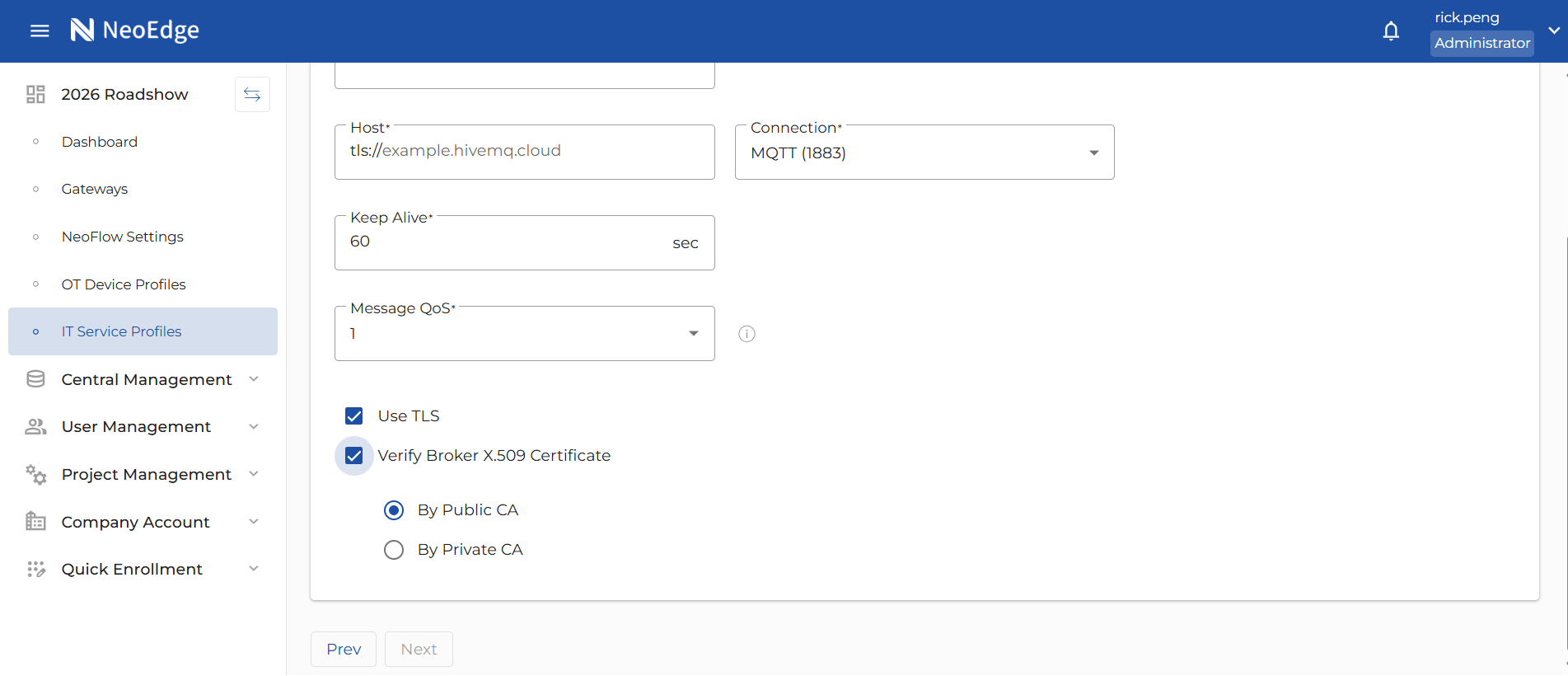
On NeoEdge Central, you can easily enable the services you need in four steps and deploy them to your actual IoT field, which includes:
- Select the gateway you wish to use
- Select the communication protocol for data collection from equipment
- Select the IT systems to be integrated
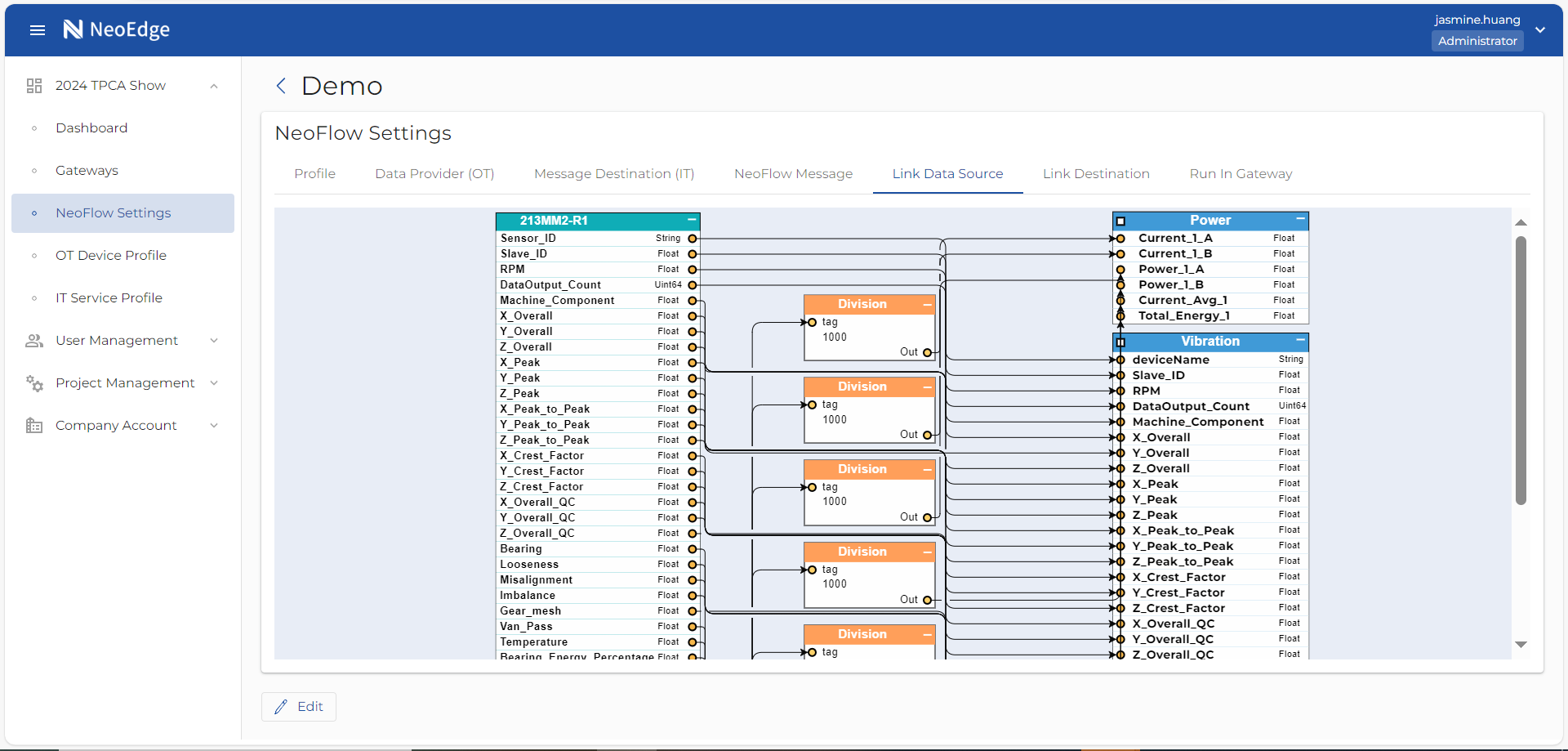
- Build business data pipelines with NeoEdge
Finally deployed to the specified gateway.
The activation, configuration, and deployment of these services are all performed in a secure and supervised environment.
Gateway Full Lifecycle and Real-time Operations and Maintenance Management
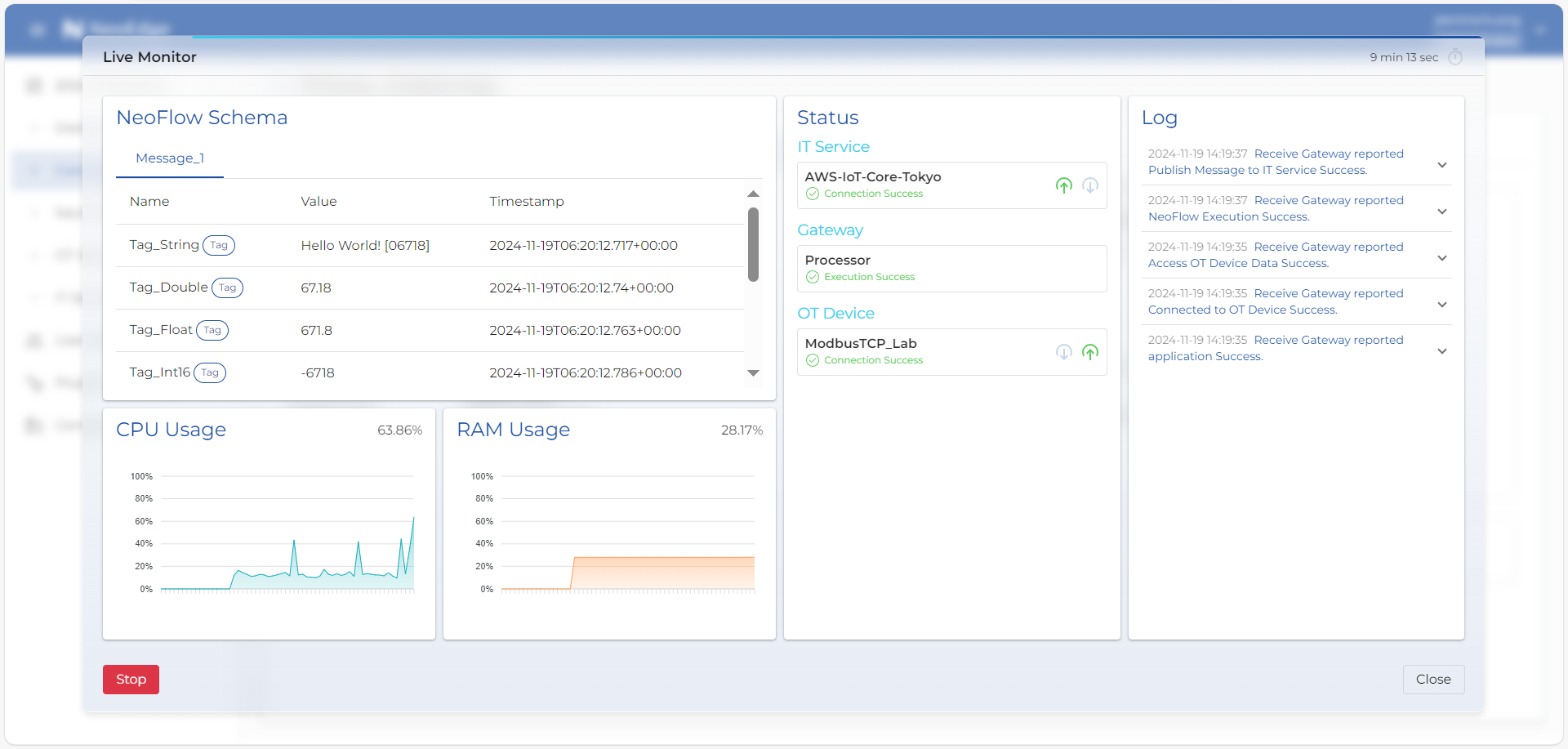
NeoEdge Central provides full lifecycle management for gateways, from deployment and operation to decommissioning. With the Real-Time Monitoring dashboard, you can grasp the operational status of global Gateways and NeoFlow processes at a glance. Nodes display their health status with visual indicator lights. In case of anomalies, error logs can be traced in real-time, significantly reducing troubleshooting time and on-site dispatch costs, ensuring system stability and optimizing operational efficiency.
- Comprehensive Status Monitoring: Real-time monitoring of gateway connectivity, system resource utilization (e.g., CPU/memory), NeoFlow operational status, and application/hardware version information.
- Proactive Alerting and Analysis: With data upload anomaly alerts and operational audit logs, managers can immediately identify and address potential risks, significantly reducing the need for on-site dispatch and saving labor and time costs.
- Integrated Lifecycle Management: Bridging one-click provisioning in the enrollment phase with legal compliance, extending to certificate revocation and fault replacement SOPs in the retire phase, enabling standardized and automated management of gateways from onboarding to decommissioning.
Authorization Management
NeoEdge adopts a license management architecture centered around a License Pool, decoupling application licenses from individual devices. Licenses can be dynamically allocated, recycled, and reassigned among distributed edge nodes, enabling centralized management and efficient resource utilization. This architecture is particularly suitable for large-scale edge AI deployment scenarios, providing flexible and scalable license management capabilities.
Project and Permissions Management
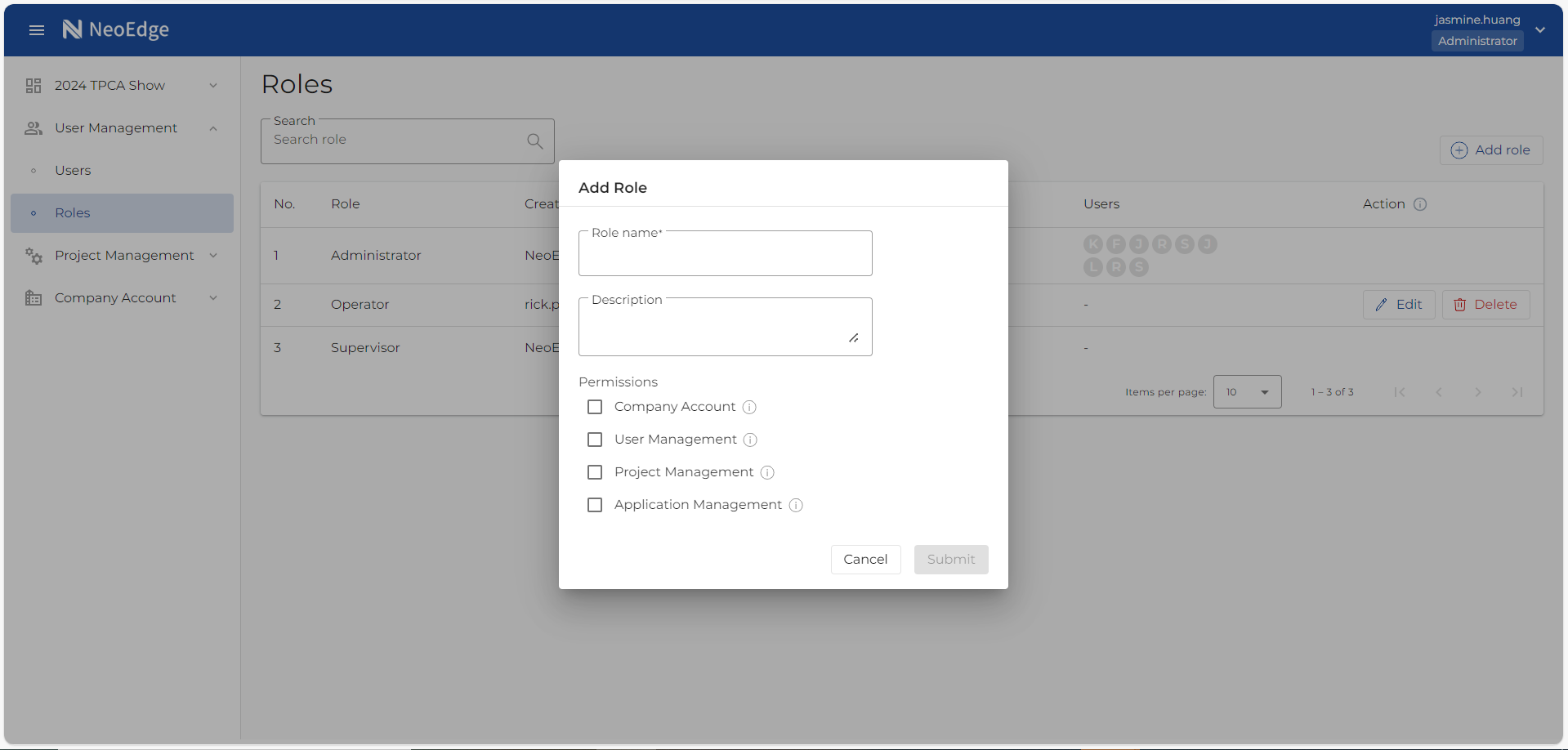
If you are a project manager, you can invite OT and IT colleagues to participate in development and management, and also add clients or owners to the project for real-time progress and configuration tracking. The platform adopts RBAC role-based access control. You can assign corresponding operational permissions to different roles such as system administrator, project manager, field engineer, and external partner according to your organizational structure, ensuring that each user can only access the functions and data required for their responsibilities.
If you are a company owner, you can clearly understand the project managers, project specifications, installed hardware, and the usage and costs of each project in NeoEdge Central. All project construction specifications and operation records are completely preserved, so you don't have to worry about project handover or personnel changes.
Neoedge Central project management allows you to systematically document IoT project specifications, so you don't have to worry about project handover or personnel changes.
Cybersecurity Architecture
NeoEdge Central is built with a security architecture that follows ISO 27017 and IEC 62443 standards, and integrates TPM 2.0 hardware security modules, corresponding to critical infrastructure cybersecurity regulations.
For device and authentication, the platform adopts a PKI / X.509 certificate system, combined with mutual mTLS authentication and multi-factor authentication (MFA), to ensure rigorous security from devices to personnel. All data transmissions are encrypted with TLS 1.2 throughout, guaranteeing the confidentiality and integrity of data during collection, transformation, and upload. Complete audit trails are maintained for all operational actions, and a secure remote access mechanism is provided to meet enterprise auditing and compliance requirements.