

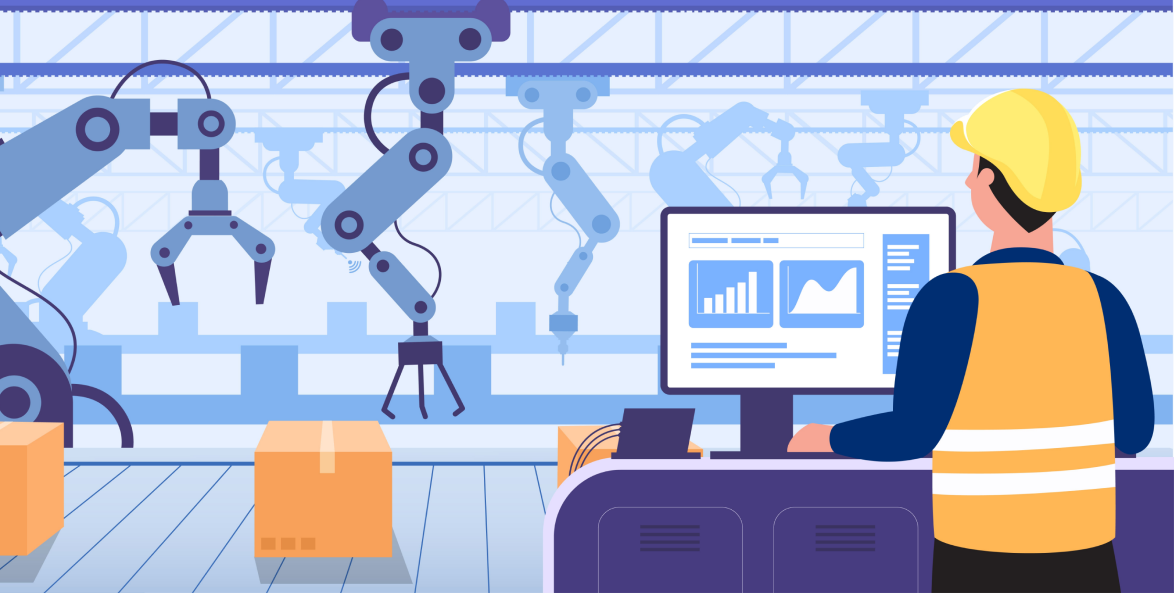

In manufacturing, oil & gas, energy, and transportation sectors, equipment is complex, sites are geographically dispersed, and operations are difficult to manage. These challenges make "operations and maintenance management" one of the most critical tasks for ensuring stable business operations.As maintenance demandsgrow increasingly complex, more enterprises are evaluating the adoption of "remote operations and maintenance management platforms" to ensure operational stability.
- What is Field Operations and Maintenance Management?
- Core Objectives of Implementing O&M Management
- Application Scenarios
- Why Does the O&M Mechanism Need an Upgrade?
- In-House O&M System vs. NeoEdge Edge Computing Orchestration Platform
- Conclusion: Adopting an O&M Platform is a Critical Investment in Business Resilience
What is Field Operations and Maintenance Management?
Field Operations and Maintenance (O&M) Management" refers to the integrated monitoring, preventive maintenance, and resource scheduling of equipment, systems, personnel,and environments across physical sites such as factories, warehouses, energy stations, and transportation facilities— ensuring continuous, efficient, and safe operations. It encompasses the entire workflow from device connectivity and data collection to anomaly alerts, maintenance records, and personnel dispatch.
Core Objectives of Implementing O&M Management
- Reduce equipment failure risk:Enable preventive maintenance to avoid unexpected downtime.
- Improve workforce efficiency:Gain clear visibility into each O&M personnel's task assignments and progress.
- Real-time site awareness:Data visualization and instant anomaly alerts.
- Strengthen operations record management:All maintenance, anomalies, and repairs are digitally documented and traceable.
- Support unified management across multiple sites and devices:Especially for enterprises with cross-regional deployments or system integrators (SIs).
Application Scenarios
- Manufacturing (cross-regional and multinational production sites)
- Elevator and managed equipment maintenance providers
- Machine and equipment manufacturers
- Energy sector (solar, wind, and energy storage sites)
- Smart city / transportation management agencies
Why Does the O&M Mechanism Need an Upgrade?
In actual operations, maintenance work spans anomaly detection, notification, dispatch, reporting, and follow-up record management — each step directly impacting equipment stability and personnel efficiency. Many enterprises still rely on traditional O&M practices, which depend heavily on manual inspections, paper-based work orders, and informal communication. Information is fragmented, response is delayed, and tracking is difficult — the root causes of incident escalation and wasted manpower.
By adopting an O&M management platform, enterprises can establish standardized workflows through real-time monitoring, automated dispatch, and centralized data management. Combined with the latest AI Agent technology, it not only improves overall maintenance efficiency but also enables management teams to benchmark site performance and continuously optimize operations. This is more than an efficiency upgrade — it is an upgrade in risk control and operational resilience.
| Item | Traditional O&M | Challenges & Risks | Smart O&M |
|---|---|---|---|
| Anomaly Detection | Relies on manual inspection or on-site staff reporting | Delayed detection, unable to respond to anomalies in real time, risk of incident escalation | Real-time data monitoring and automated alerts, combined with visual AI for fast anomaly detection |
| Maintenance Notification | Via phone, verbal communication, or informal channels like LINE | Messages lost, difficult to track, unclear accountability | Systematic notification process with full records and instant alerts to relevant personnel |
| Work Order Dispatch | Supervisors manually assign based on experience, paper-based work orders | Non-transparent dispatch, low efficiency, suboptimal resource allocation | AI Agent automatically assigns technicians based on location, skills, and schedule optimization |
| Maintenance Reporting | Handwritten forms or retroactive Excel entries | Delayed reporting, missing information, lack of on-site evidence | Centralized records with automatic equipment repair history and generative AI knowledge base |
| Maintenance History | Scattered across paper records, personal notes, and non-standard forms | Difficult to retrieve and track, insufficient data for analysis | Centralized records with automatic equipment repair history and generative AI knowledge base |
| Preventive Maintenance | Relies on human memory or manual scheduling reminders | Missed maintenance, loose discipline, increased equipment failure frequency | Condition-based maintenance recommendations that optimize maintenance cycles and reduce unexpected downtime |
| Multi-Site Unified Management | Each site managed independently by different personnel, no unified platform | HQ lacks full visibility, difficult to benchmark and analyze site performance | Unified multi-site dashboard with visualization, comparison, and analytics capabilities |
In-House O&M System vs. NeoEdge Edge Computing Orchestration Platform
When upgrading O&M management, enterprises often face a choice between "building in-house" and "adopting a platform." However, the seemingly flexible in-house approach actually hides substantial development and maintenance costs.
Building a field O&M platform involves far more than developing a system interface and connecting a database — it also requires system architecture design, future scalability, OT data parsing, industrial communication protocols, device management, dispatch logic, security standards, and AI model deployment. Without industry experience and a scalable architecture, this complex cross-domain integration often leads to technical debt and difficult-to-maintain systems.
NeoEdge is an AIoT O&M platform purpose-built for industrial environments.Device connectivity, edge data processing, extensible development kits (SDK/API), AI model deployment, and security controlsare all modularized through containerization technology — enabling enterprises to deploy quickly and scale reliably.
NeoEdge not only saves enterprises development time and risk, but also provides a sustainable, long-term flexible digital foundation.
| Core Dimension | Focus Area | In-House Development Challenges | NeoEdge Platform Advantages |
|---|---|---|---|
| Data Integration & AI Deployment | OT data ETL | Must develop custom communication protocol and data transformation modules | NeoFlow drag-and-drop ETL tool with native support for multiple industrial protocols |
| AI Model Deployment | Lacks model version management and deployment pipeline; must build container and runtime environment | AI inference and model deployment service — modularized AI inference environment for rapid edge deployment | |
| Platform Architecture & Scalability | System Architecture & Infrastructure | Must design hybrid cloud architecture independently and manage platform deployment | Software-defined modular architecture supporting cloud and on-premises integration, with mTLS, TLS 1.2, and TPM 2.0 security framework |
| Scalability & Reliability | Must independently validate stability and build internal QA team | Field-validated, stable and reliable | |
| Customization Flexibility | Full control but requires heavy development resources | Provides SDK/API for rapid customization | Vendor-managed with regular updates and patches |
| O&M Efficiency & Deployment Speed | DevOps, Operations & Support | High labor costs; system updates and security patches must be handled internally | Vendor-managed with regular updates and patches |
| Time to Deploy | Long development cycle (12–24 months) | Rapid deployment (1–2 months) | |
| Maintainability | Highly dependent on internal O&M resources | Platform maintenance and version updates supported by vendor | |
| Device Management | Must develop custom registration and OTA management mechanisms | Multi-protocol device management with auto-registration and support for multiple IPC brands | |
| Security & Compliance | Security & Authentication | Must build PKI, RBAC, identity verification, and IEC 62443 compliance from scratch | Integrated TPM 2.0, mTLS, RBAC, MFA — designed to meet IEC 62443 requirements |
| Data Protection & Governance | Must build transmission/storage encryption, access management, and anomaly detection | Supports TLS 1.2 encryption, audit logs, and operation event records | |
| Compliance Readiness | Must build compliance processes from zero | Compliant with IEC 62443 standard | |
| Resource Cost & Operational Risk | Total Cost of Ownership (TCO) | High overall cost (labor, maintenance, security patching) | Subscription and licensing model with predictable costs |
Conclusion: Adopting an O&M Platform is a Critical Investment in Business Resilience
When equipment grows more numerous, sites more dispersed, and operations more data-dependent, "field O&M" is no longer just back-end support — it is a core function that directly impacts enterprise efficiency and competitiveness. Traditional O&M methods, lacking systematic support, struggle to sustain long-term operations and expansion.
Building an in-house platform may seem flexible and controllable, but in practice involves deep cross-domain OT/IT integration and maintenance challenges — often trapping enterprises in high costs, high risks, and maintenance bottlenecks. In contrast, NeoEdge provides a battle-tested industrial platform covering data integration, AI deployment, secure connectivity, and multi-site collaboration — significantly lowering the technical barrier to adoption and expansion.
Upgrading O&M capabilities is not just about adopting a tool — it is about building an operational capability that can be replicated and continuously optimized over the long term.
Choosing NeoEdge means building a solid foundation for on-site stability, team efficiency, and enterprise resilience — the bedrock of future digital transformation.
Contact us learn how to build your O&M management system with NeoEdge.
About eCloudEdge Digital Innovation
eCloudEdge Digital Innovation Co., Ltd. is a startup team strategically invested in by E.SUN Cloud, a leading brand in Taiwan's cloud services. Leveraging E.SUN Cloud's experience and customer base in cloud services, combined with eCloudEdge Digital Innovation's self-developed next-generation AIoT edge computing collaborative management platform, we achieve cloud-ground interconnection, and IT+OT solutions that integrate virtual and real environments.
The eCloudEdge Digital Innovation team brings together multiple experts from the fields of industrial automation and information technology (IT), each with over 20 years of extensive experience in their respective domains. The R&D team is proficient in embedded platform and cloud-edge collaboration system development, possessing strong technical capabilities. They are a rare product development team in the industry with practical experience in both IT and OT.
With extensive market experience and professional expertise, we are launching our first SaaS product, NeoEdge, the industry's first Edge Orchestration Platform. Utilizing advanced cloud and IT technologies, we provide clients with a system architecture that is both secure and open. We focus on addressing the challenges of data integration and operations management in the convergence of OT/IT, ensuring compliance with information security while unlocking data potential. We empower businesses to reclaim data ownership and accelerate their dual-axis transformation.
Find out more about eCloudEdge Digital Innovationwww.eCloudedge.com